AI-Assisted Programming for Web and Machine Learning Improve your development workflow with ChatGPT and GitHub Copilot


Free Download AI-Assisted Programming for Web and Machine Learning: Improve your development workflow with ChatGPT and GitHub Copilot
English | 2024 | ASIN: B0CKRMJPCM | 960 pages | EPUB (True) | 24 MB
Speed up your development processes and improve your productivity by writing practical and relevant prompts to build web applications and Machine Learning (ML) models
Read more

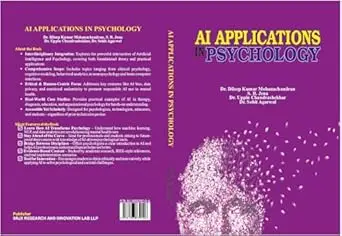
AI APPLICATIONS IN PSYCHOLOGY


Free Download AI APPLICATIONS IN PSYCHOLOGY
English | 2025 | ASIN: B0FC5XGMF1 | 228 pages | EPUB (True) | 2.27 MB
The book is structured into eleven comprehensive chapters, each addressing a key thematic area where AI intersects with psychology:
Read more

AI 2025 The Definitive Guide to Artificial Intelligence, APIs, and Python Programming for the Future


Free Download AI 2025: The Definitive Guide to Artificial Intelligence, APIs, and Python Programming for the Future: Discover Machine Learning, Deep Learning, NLP, Automation, ... TensorFlow. (AI Agents Masterclass Book 5)
English | 2025 | ASIN: B0DXNRF5Y2 | 420 pages | Epub | 1.50 MB
AI 2025: The Ultimate Guide to Artificial Intelligence, Machine Learning, and Python-Powered Automation
Read more

A Rhetorics of the Word A Philosophy of Christian Life, Part II (PDF)


Free Download George Pattison, "A Rhetorics of the Word: A Philosophy of Christian Life, Part II"
English | ISBN: 0198813511 | 2020 | 288 pages | PDF | 2 MB
A Rhetorics of the Word is the second volume of a three-part philosophy of Christian life. It approaches Christian life as expressive of a divine calling or vocation. The word Church (ekklesia) and the role of naming in baptism indicate the fundamental place of calling in Christian life. However, ideas of vocation are difficult to access in a world shaped by the experience of disenchantment. The difficulties of articulating vocation are explored with reference to Weber, Heidegger, and Kierkegaard. These are further connected to a general crisis of language, manifesting in the degradation of political discourse (Arendt) and the impact of new communications technology on human discourse. This impact can be seen as reinforcing an occlusion of language in favour of rationality already evidenced in the philosophical tradition and technocratic management. New possibilities for thinking vocation are pursued through the biblical prophets (with emphasis on Buber's and Rosenzweig's reinterpretation of the call of Moses), Saint John, and Russian philosophies of language (Florensky to Bakhtin). Vocation emerges as bound up with the possibility of being name-bearers, enabling a mutuality of call and response. This is then evidenced further in ethics and poetics, where Levinas and Hermann Broch (The Death of Virgil) become major points of reference. In conclusion, the themes of calling and the name are seen to shape the possibility of love-the subject of the final part of the philosophy of Christian life:

Read more

A Rhetorics of the Word A Philosophy of Christian Life, Part II (EPUB)


Free Download George Pattison, "A Rhetorics of the Word: A Philosophy of Christian Life, Part II"
English | ISBN: 0198813511 | 2020 | 288 pages | EPUB | 2 MB
A Rhetorics of the Word is the second volume of a three-part philosophy of Christian life. It approaches Christian life as expressive of a divine calling or vocation. The word Church (ekklesia) and the role of naming in baptism indicate the fundamental place of calling in Christian life. However, ideas of vocation are difficult to access in a world shaped by the experience of disenchantment. The difficulties of articulating vocation are explored with reference to Weber, Heidegger, and Kierkegaard. These are further connected to a general crisis of language, manifesting in the degradation of political discourse (Arendt) and the impact of new communications technology on human discourse. This impact can be seen as reinforcing an occlusion of language in favour of rationality already evidenced in the philosophical tradition and technocratic management. New possibilities for thinking vocation are pursued through the biblical prophets (with emphasis on Buber's and Rosenzweig's reinterpretation of the call of Moses), Saint John, and Russian philosophies of language (Florensky to Bakhtin). Vocation emerges as bound up with the possibility of being name-bearers, enabling a mutuality of call and response. This is then evidenced further in ethics and poetics, where Levinas and Hermann Broch (The Death of Virgil) become major points of reference. In conclusion, the themes of calling and the name are seen to shape the possibility of love-the subject of the final part of the philosophy of Christian life:

Read more

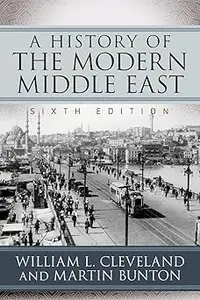
A History of the Modern Middle East


Free Download William L. Cleveland, "A History of the Modern Middle East"
English | ISBN: 081334980X | 2016 | 624 pages | AZW3 | 13 MB
A History of the Modern Middle East examines the profound and often dramatic transformations of the region in the past two centuries, from the Ottoman and Egyptian reforms, through the challenge of Western imperialism, to the impact of US foreign policies. Built around a framework of political history, while also carefully integrating social, cultural, and economic developments, this expertly crafted account provides readers with the most comprehensive, balanced and penetrating analysis of the modern Middle East.
Read more